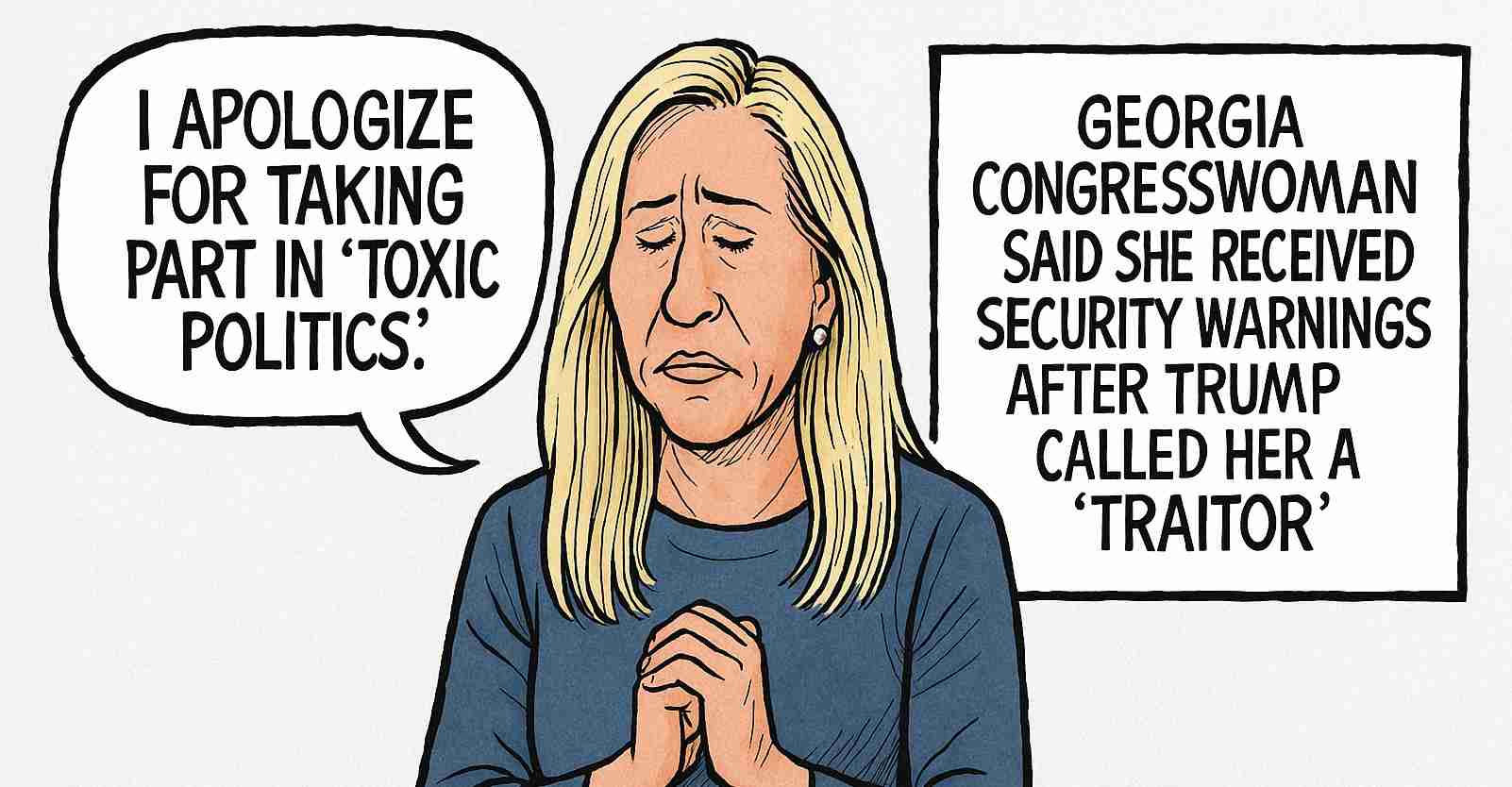
Marjorie Taylor Greene Apologizes for ‘Toxic Politics’ as Trump Withdraws Support in Epstein Files Feud
Rep. Marjorie Taylor Greene apologized on CNN for engaging in “toxic politics,” while insisting she would not back down in demanding full access to Department of Justice files related to Jeffrey Epstein, after a falling-out with Donald Trump.
Key takeaways
- Public apology but persistent demand: Greene apologized for the tone of her tactics but refused to retract her push for release of the DOJ Epstein files.
- Trump withdraws support: The split widened when Trump publicly encouraged a primary against Greene and withdrew his campaign support.
- Security concerns: Greene reported increased death threats and private security warnings; her daughter voiced public concern for the family’s safety.
- Local implications: The feud could reshape endorsements, fundraising and voter conversations in places like Redding, California.
Main content
Apology, interview and what she said
On CNN’s State of the Union, Rep. Greene told host Dana Bash she was sorry for engaging in “toxic politics,” a phrase she used to acknowledge rising bitterness in public debate. She framed the apology as a call to tone down personal attacks while continuing to press policy questions she regards as vital.
Greene said her faith and belief in forgiveness drove her remarks about wanting to “make up” with Trump, and she stressed she still supports many conservative policy goals. At the same time, she made clear she would not apologize for demanding transparency: she called for the public release of DOJ files on Jeffrey Epstein as a matter of accountability.
Video excerpts and reporting of the interview are available via Fox News and coverage aggregated in public outlets such as AOL.
How the feud with Trump escalated
The dispute intensified after Greene publicly urged full disclosure of Department of Justice records tied to Jeffrey Epstein. That position put her at odds with some allies who cautioned against probing high‑profile networks for political reasons.
Trump took to Truth Social to criticize Greene — calling her “Wacky” Marjorie — and suggested conservatives consider mounting a primary challenge, effectively withdrawing his campaign support. Greene responded by sharing text-message screenshots she said showed efforts to explain her stance to Trump and accusing him of unfair attacks.
Reporting and aggregation on the exchange and Epstein-files push are tracked by Notus, which documented the public back-and-forth and subsequent reactions.
Security warnings and threats after public clash
Following the public confrontation, Greene said she received warnings from private security firms and experienced a rise in death threats that alarmed her family. Her daughter publicly urged people to “pray for my mom’s safety,” describing the situation as a “hotbed of threats.”
“I have a small understanding of the fear and pressure victims face,” Greene said, drawing a comparison to the fear Epstein’s victims experienced — a comment that has prompted scrutiny given the differences between threats to a lawmaker and abuse survivors.
Coverage of family safety concerns appeared in wider reporting, including Times of India.
Reconciliation efforts, forgiveness and political positioning
Despite the rancor, Greene signaled a desire to mend fences, invoking Christian teachings about forgiveness while also underscoring policy continuity: she said she remains aligned with many of Trump’s agenda items even as she presses for transparency.
Politically, Greene framed her push for the Epstein files as distinct from partisan rivalry — arguing the public deserves access and that wealthy, powerful people should not be insulated from scrutiny. That message is aimed at conservative voters who prioritize accountability in government.
Broader context: part of a pattern of breaks with Trump
Observers note this episode is not the first public divergence between Greene and Trump. In recent months she has broken with party orthodoxy on items including foreign policy language about the Israel‑Gaza conflict and votes to extend Affordable Care Act subsidies. Such moves have unsettled some conservative allies and raised questions about her alliances.
Reporting and source note
This account summarizes interviews, social-media posts and published reporting documenting the Greene–Trump exchange, Greene’s CNN apology, and her continued demand for release of Jefferson Epstein–related DOJ records. Primary reporting and commentary are drawn from Times Media Service and coverage aggregated publicly.
Source links for reference
- Notus coverage of Greene–Trump exchange and Epstein-files push
- Fox News video of Greene remarks and interview excerpts
- AOL report on Greene apologizing for toxic politics
- Times of India coverage of threats and family concerns
Implications for Redding, California
Political consequences
Redding’s conservative voters typically value party unity, strong leadership and accountability. A high-profile split like Greene’s with Trump can force local officials and activists to take sides, potentially sparking primary challenges and shifting donor alignments in Shasta County and the North State.
Campaign fundraising and endorsements
Withdrawal of support from a major figure can redirect endorsements and funding. Local Republican committees and donors in Redding may reassess investments, which could either open space for challengers or consolidate backing for incumbents who align with Trump’s positions.
Security and public safety concerns
Threats reported in the feud highlight risks to public officials and staff. City councils, county supervisors and campaign teams in Redding may review security protocols for town halls and public events; hosting organizations should consider enhanced protections for speakers and attendees.
Voter appetite for transparency
Greene’s insistence on releasing the Jeffrey Epstein files taps into a conservative current around accountability. Redding voters who prioritize law‑and‑order and anti‑corruption measures may be receptive to candidates promising greater transparency, even if those positions create intra‑party friction.
Local media environment and discourse
Local conservative media, talk radio and social platforms in Redding are likely to amplify aspects of the feud that resonate with readers — including trust in institutions, family safety and perceived double standards — which may intensify partisan debate and local engagement.
Practical effects on everyday residents
For residents focused on jobs, housing and public safety, the national drama may seem remote. But when national rifts trigger primary fights or realign endorsements, local ballot races can shift quickly — motivating voters who prefer predictable governance to engage more in precinct activities.
Political advice for local conservatives
Local leaders seeking both unity and accountability should emphasize clear policy priorities, insist on civility, and bolster security for public servants. Candidates who balance a commitment to transparency with steady leadership are likely to appeal to town‑hall audiences in Redding.
Watchpoints: Track whether the national rift produces a local primary, how donors respond, and whether demands for transparency — including scrutiny of cases like the Jeffrey Epstein files — gain traction in conservative circles. These outcomes will shape the local political calendar and precinct debates.