
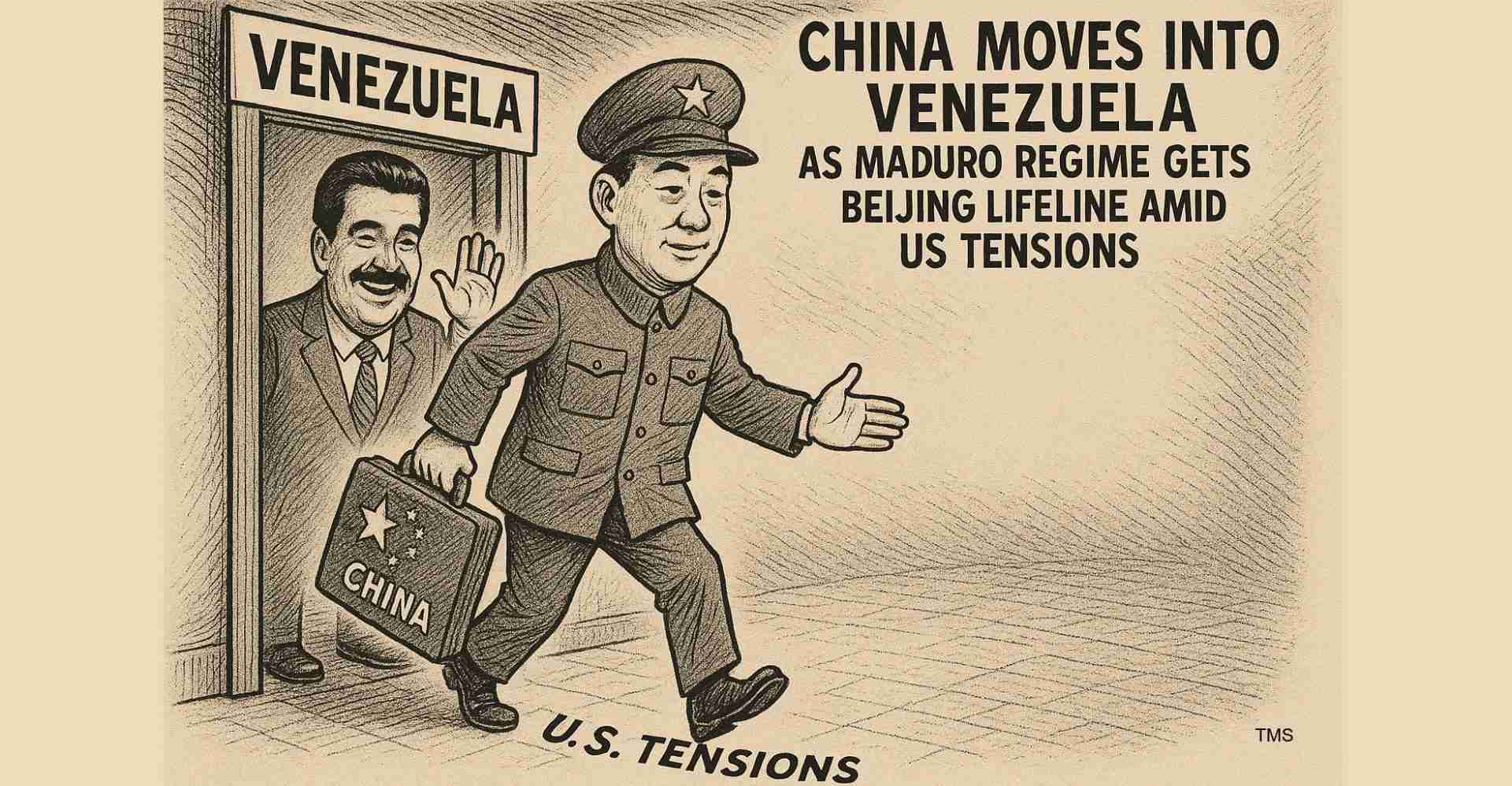
China moves into Venezuela as Maduro regime gets Beijing lifeline amid US tensions — “This really looks like China is going to completely take over the Venezuelan economy,” says Gordon Chang
China has sharply expanded economic and political ties with Nicolás Maduro’s Venezuela, unveiling over 600 cooperation pacts for 2025 and shifting from loan-for-oil deals toward investment, acquisitions and special economic zones amid rising tensions with the United States.
Key takeaways
- More than 600 cooperation agreements are planned for 2025 across trade, technology, energy, agriculture and other sectors, according to reporting by El País.
- Beijing is shifting strategy from large loan-for-oil packages to targeted direct investment, acquisitions and Special Economic Zones (SEZs), per the El País report.
- Political lifeline for Maduro: China frames the relationship as long-term and respectful of sovereignty in official statements from CIDCA and the PRC Foreign Ministry.
- Analysts split: Some warn of a deepening Chinese footprint, while many experts call Beijing’s approach cautious and sector-focused (see Fox News and ThinkChina).
Main content
Key information
Chinese and Venezuelan officials announced more than 600 planned cooperation agreements for 2025 covering trade, technology, energy, agriculture and additional sectors, as reported by El País.
Beijing publicly describes the relationship as long-term and respectful of Venezuelan sovereignty in statements from the Chinese International Development Cooperation Agency (CIDCA) and the Ministry of Foreign Affairs, while Caracas emphasizes Chinese backing as a political lifeline amid Western sanctions.
What the agreements cover
Officials say the pacts span industry, agriculture, science, technology and infrastructure. Chinese state agencies emphasize development assistance and “productive cooperation” over the large loan-based projects of past decades (see CIDCA statement and the PRC Foreign Ministry statement).
At the Shanghai Expo 2025 both governments highlighted a zero-tariff trade arrangement and dozens of business-to-business contracts that China says will help Venezuelan producers reach Chinese buyers, positioning these gains as a route to revive exports and attract investment (El País; Fox News).
From loans to SEZs and acquisitions
Over the past two decades, Beijing extended roughly $62.3 billion in development loans and oil-for-loan deals to Caracas — arrangements that left Venezuela heavily indebted and often tied to Chinese energy offtake, according to historical analyses (Global Policy Journal analysis).
Learning from past losses, China’s new approach favors targeted investments, corporate acquisitions and the creation of Venezuelan Special Economic Zones (SEZs) intended to offer tax and regulatory incentives to Chinese firms, reducing sovereign lending exposure while aiming to accelerate productive activity (El País).
Political backing and a Maduro regime lifeline
Beyond commerce, Beijing’s engagement carries a political dimension. Official rhetoric stresses mutual trust, non-interference and respect for sovereignty, which Caracas portrays as a counterweight to U.S. pressure (CIDCA; PRC Foreign Ministry).
China’s economic preferences, market access and high-level diplomatic support function as a lifeline for Maduro’s government at a time when many Western institutions remain closed to Caracas (CFR backgrounder).
Voices of alarm and caution
Critics warn the expansion could amount to a Chinese takeover of key Venezuelan assets; commentator Gordon Chang characterized the moves as bordering on economic takeover in Fox News coverage.
“This really looks like China is going to completely take over the Venezuelan economy,” — Gordon Chang
Most academic and policy experts urge a calmer interpretation: they note Beijing is being pragmatic, avoiding risky sovereign lending, focusing on export-generating projects, and keeping Venezuela at arm’s length from China’s core multilateral networks (El País; ThinkChina analysis).
Regional strategy and Beijing’s broader aims
China’s outreach to Venezuela fits a wider strategy to deepen ties across Latin America through trade, investment and credit lines, including a multi-billion yuan pledge at the China-CELAC engagement in May 2025 (CFR).
Venezuela is strategic for Beijing: it offers energy resources, diplomatic support for China’s global positions, and a testing ground for state-business cooperation models, party-to-party exchanges and doctrinal training for Venezuelan officials (El País).
Limits to Beijing’s reach
Experts note constraints: Venezuela’s political instability, weak institutions and a history of mismanaged projects complicate sustained investment. China prefers clear returns, which explains the emphasis on acquisitions, SEZs and trade deals over open-ended sovereign lending (El País; Global Policy Journal).
Implications for Redding, California
Local readers in Redding should consider how a deeper China–Venezuela partnership may ripple outward — affecting energy markets, trade patterns, political influence and migration pressures.
Economic effects
- Energy prices and markets: Increased Venezuelan oil production flowing under Chinese arrangements could shift global supply and prices; stabilization might lower costs, while persistent political risk could increase volatility.
- Trade and supply chains: China’s expanded access to Venezuelan commodities may subtly alter global supply lines; Northern California businesses should monitor shipping and commodity dynamics.
Political and security consequences
- U.S. influence in the hemisphere: Beijing’s backing of Caracas complicates U.S. efforts to promote democratic and market reforms — a concern for conservative audiences valuing American leadership.
- National security: A deeper Chinese footprint raises questions about intelligence collection, access and influence operations even if current deals emphasize commerce and SEZs.
Social and community impact
- Migration and stability: If Chinese support sustains the Maduro government without reform, Venezuela’s humanitarian crisis may persist and continue to drive regional migration flows.
- Local values and political resonance: For conservative readers in Redding, China’s actions may underscore calls for robust U.S. policy in the hemisphere.
Practical applications for residents and local leaders
- Energy planning: Monitor global fuel price trends and budget for potential fluctuations in transport and heating costs.
- Business vigilance: Exporters and importers should watch for changes in trade policy or commodity flows tied to China–Venezuela ties.
- Civic engagement: Concerned voters may press representatives for clearer strategies balancing diplomacy, sanctions and democratic support in Latin America.
Sources and further reading
- “Venezuela and China showcase partnership through productive deals, not loans,” El País, July 6, 2025
- CIDCA (Chinese International Development Cooperation Agency) statement, May 2025
- Ministry of Foreign Affairs of the PRC, May 2025
- Fox News coverage including voice of Gordon Chang
- Global Policy Journal analysis of China–Venezuela lending history
- Council on Foreign Relations backgrounder on China in Latin America
- ThinkChina analysis on limits to Chinese power in Venezuela



