
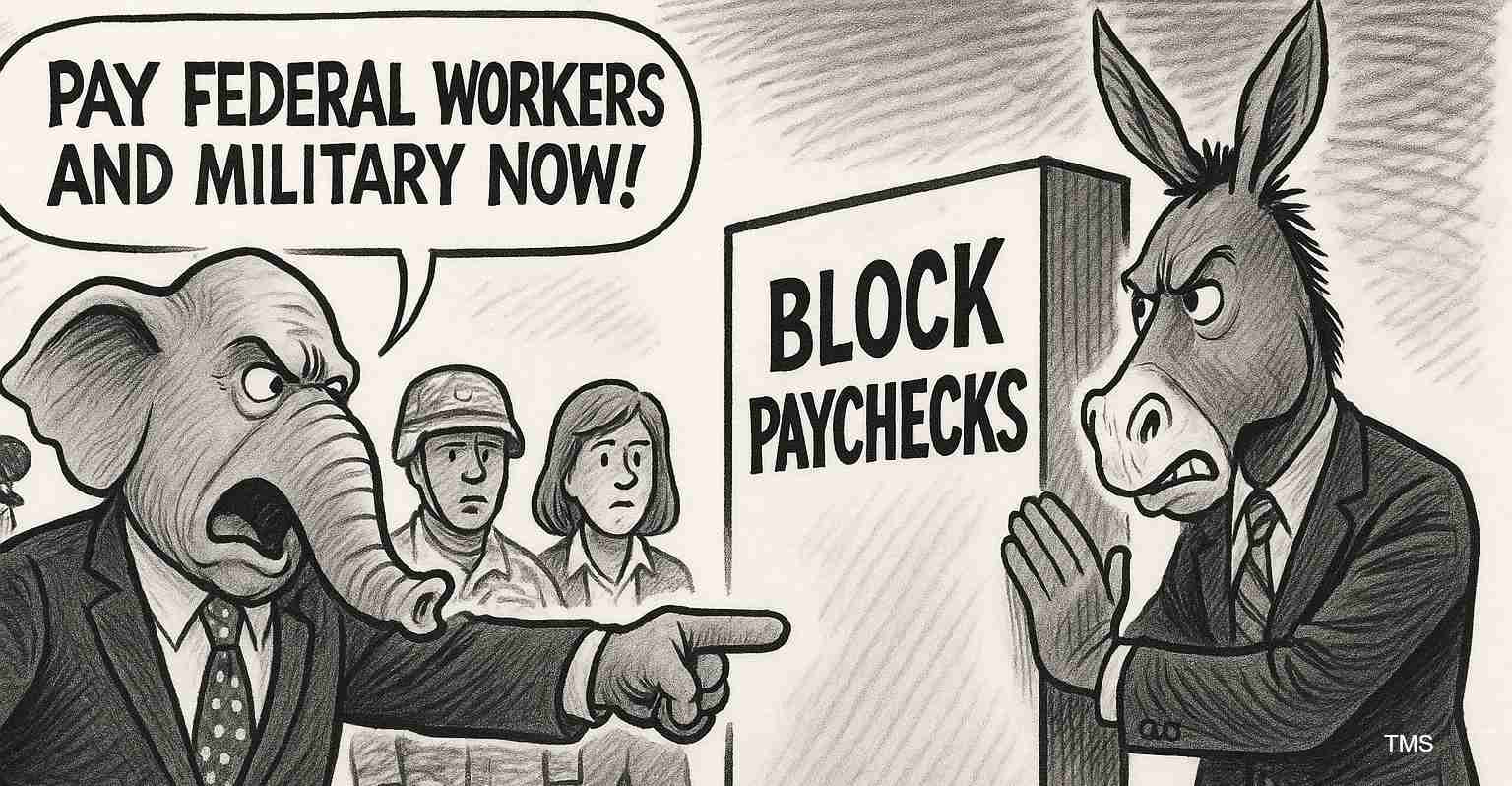
Democrats Block Federal Worker Pay: Senate Rejects Ron Johnson Bill to Guarantee Government Shutdown Pay
Senate Democrats blocked Sen. Ron Johnson’s Republican-backed bill to guarantee pay for federal workers and the military during the 38-day government shutdown, citing insufficient safeguards against potential executive branch redirection of funds and pressing for oversight.
Key takeaways
- Vote to advance: Senate vote was 53-43 in favor but short of the 60 votes needed to overcome a filibuster — Source.
- Sponsor: Sen. Ron Johnson (R-Wis.) proposed paying active and furloughed federal workers and military personnel; the bill failed to advance — Source.
- Party dynamics: Three Democrats joined Republicans to support consideration; most Democrats opposed, citing weak safeguards and executive overreach concerns — Source and Source.
Inside the measure and the standoff
What the Johnson bill proposed
Sen. Ron Johnson’s modified proposal was written to guarantee pay for federal employees and service members during the shutdown, explicitly covering furloughed workers and aiming to reassure military personnel that pay would continue despite the lapse in appropriations. Johnson described the bill as narrowly focused on pay and said Democrats could offer amendments to add oversight if they wished. (Source)
Why Democrats blocked it
Senate Democrats argued the language lacked critical safeguards to prevent funds earmarked for paychecks from being redirected by the executive branch. Sen. Gary Peters warned the bill could permit money meant for pay to be shifted to other priorities — a concern summarized by his phrase that the bill could create an “unlimited and permanent slush fund for President Trump to use.”
“Unlimited and permanent slush fund for President Trump to use.” — Sen. Gary Peters
Democrats stressed that without explicit checks — such as statutory earmarks, reporting requirements, or time limits tied to appropriations — the proposal left too much discretion to the executive branch. (Source, Source)
What Republicans say
GOP senators pressed on the Senate floor that immediate pay for federal workers and the military is a moral imperative amid the 38-day shutdown, accusing Democrats of playing politics with paychecks. Several Republicans singled out Sen. Peters in criticism. Sen. Johnson defended his language as “completely silent on presidential authority” and said Democrats could have proposed and accepted amendments to add guardrails. (Source, Source)
Vote details and Senate dynamics
The Senate vote to advance the bill was 53-43. Although a majority favored consideration, the chamber requires 60 votes to break a filibuster and move to final passage. Three Democrats crossed party lines to support the measure; the remainder opposed it, effectively stopping the bill from moving forward. Senate leaders said they would continue work through the weekend, underscoring deep division over how to handle Government Shutdown Pay. (Source)
Offers on the table and why talks stalled
Democrats proposed ending the shutdown in exchange for a one-year extension of enhanced Affordable Care Act premium subsidies and the creation of a bipartisan commission to study long-term health-care costs. Republicans rejected tying health-care measures to the funding bill, calling that demand a “nonstarter.” The impasse showed both sides sticking to larger negotiating positions instead of splitting off a measure to immediately relieve federal workers. (Source)
Practical effects: federal workers and military paychecks
More than a month into the shutdown — the 38th day — federal workers remain without paychecks. The blocked bill sought to restore pay for both active and furloughed employees and to provide certainty to military families who depend on timely pay for mortgages, tuition, and basic needs. For furloughed civilians, missed paychecks have strained household budgets and increased demand for local aid programs; the immediate result of the Senate vote is continued uncertainty until lawmakers find a different compromise. (Source)
Why oversight and safeguards matter, according to Democrats
Democrats noted that past shutdown-era fixes had sometimes been used to sidestep congressional intent. They warned a narrowly written pay bill could be exploited to shift funds within the Treasury or executive departments without clear limits or reporting. Without explicit checks — statutory earmarks, reporting requirements, or time limits tied to appropriations — the proposal left too much discretion to the executive branch, Democrats argued. (Source, Source)
Political fallout and messaging
The episode provides both parties lines for voters: Republicans can claim they tried to secure pay for federal workers and the military while blaming Democrats for blocking it; Democrats can argue they protected congressional oversight and guarded against unchecked executive power. In conservative communities — including Redding, California — GOP messaging that “Republicans backed a measure to ensure Government Shutdown Pay, but Democrats blocked it” may resonate. The fight also highlights how legislators use leverage over unrelated policy items during funding standoffs. (Source, Source)
Implications for Redding, California
Economic impact
Local federal employees in Redding and Shasta County — including U.S. Forest Service personnel, Bureau of Land Management staff, and Department of Veterans Affairs workers — face reduced spending power. Missed paychecks hit Main Street businesses, from grocery stores to contractors. Federal contractors and seasonal workers tied to public lands or wildfire prevention may see delayed payments that ripple through local payrolls and dampen economic activity in a region still recovering from high fire risk.
Political consequences
The vote gives local conservatives a clear talking point: Republicans backed a measure to ensure Government Shutdown Pay, but Democrats blocked it. Local GOP activists are likely to pressure Democratic senators and rally support for lawmakers who vote to secure federal-worker pay without policy riders. Federal employees in the area may increase local advocacy, contacting Rep. Doug LaMalfa’s office or California’s senators to press for targeted relief and transparency on proposed safeguards.
Social effects
Families living paycheck to paycheck face greater stress; community services in Redding — food banks, churches, and nonprofits — will likely see heightened demand. Veterans reliant on VA services are especially vulnerable to disruptions in staffing or payments, increasing pressure on local veteran support groups and social services.
Cultural relevance
In Redding’s conservative-leaning community, support for the military and public servants is strong. The framing that Democrats blocked pay for federal workers and the military may deepen dissatisfaction with national Democratic leaders among local voters. The issue also taps into concerns about unchecked executive power, bolstering GOP messaging that stresses quick pay relief balanced with oversight.
Practical applications for residents
- Federal employees and contractors: Contact union reps or HR for guidance on administrative leave, retroactive pay policies, and assistance programs. Agencies often publish furlough guidance.
- Local aid: Redding residents in need can contact the Shasta County Food Bank, area churches, and community action agencies for short-term support.
- Advocacy: Citizens can reach out to Rep. Doug LaMalfa’s office and California’s U.S. senators to demand a clear path to pay and transparency on safeguards.
Ongoing outlook
The Senate planned to remain in session through the weekend seeking a breakthrough, but the deadlock signaled no imminent end to the shutdown. With paychecks still in limbo after 38 days, the political fight over Government Shutdown Pay, the Ron Johnson bill, and related health-care bargaining will likely shape future negotiations on Capitol Hill. (Source, Source)



