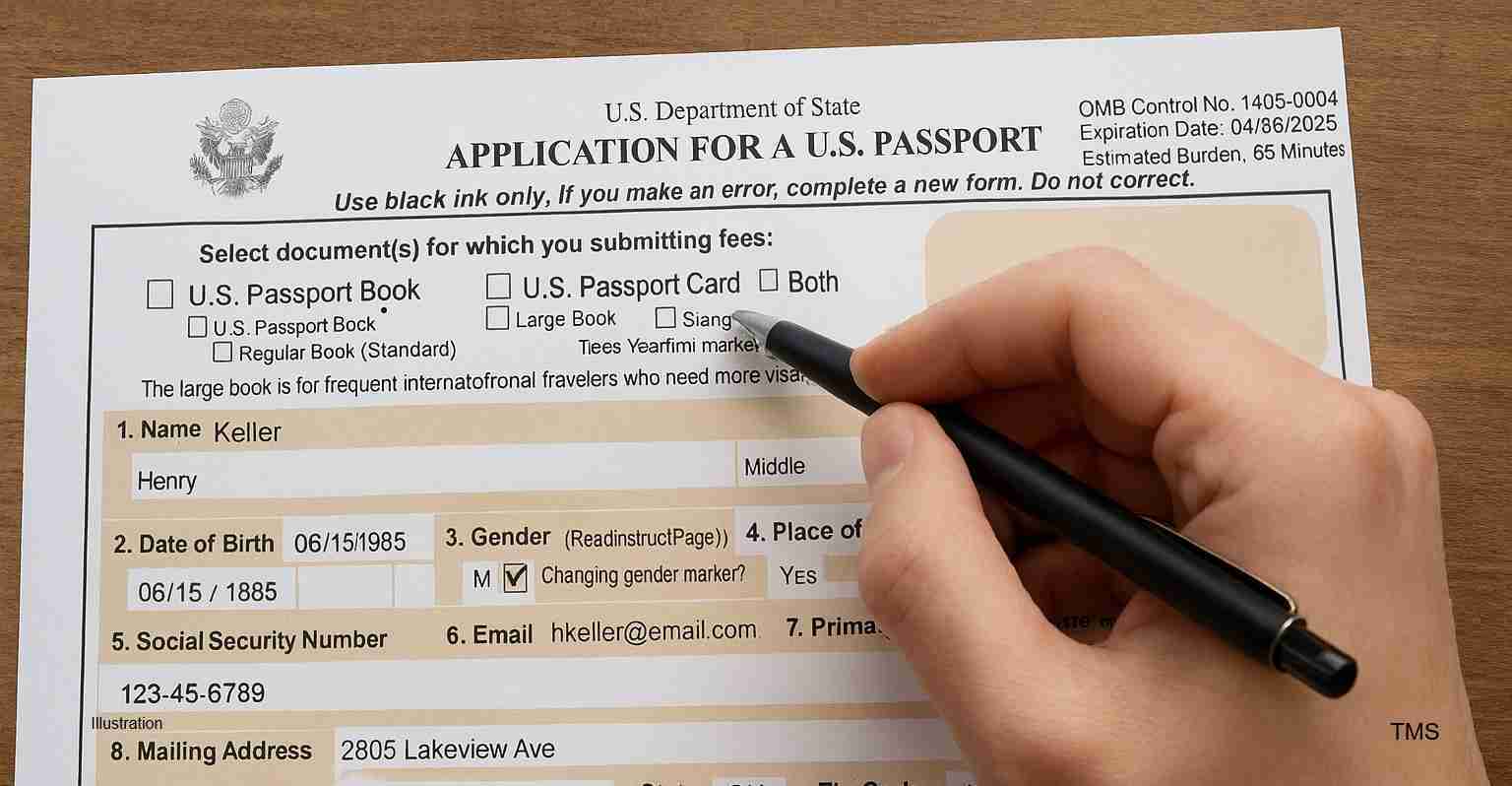
Supreme Court lets Trump administration require passports to list Passport Sex Assigned at Birth, blocking “X” and gender-marker choices for now
The U.S. Supreme Court has allowed the Trump administration to enforce passports listing an individual’s sex assigned at birth, blocking transgender and nonbinary people from selecting gender-congruent markers or an “X” while related litigation proceeds.
- Emergency stay: The Court paused a lower-court order that had allowed gender-congruent markers, reinstating a sex-assigned-at-birth rule while the case continues.
- Policy basis: The move follows a Jan. 20, 2025 executive order directing federal IDs to reflect sex assigned at birth.
- Ongoing litigation: The case (Orr v. Trump) remains active; the stay is temporary and issued via the Court’s shadow docket.
- Local impact: Travelers and service providers — including those in Redding, Calif. — may face immediate practical and safety concerns.
Key information
- Date and order: On Nov. 6, 2025, the Supreme Court stayed a lower-court injunction that had allowed transgender and nonbinary people to obtain passports with gender markers matching their identity, including an “X” (Supreme Court order; analysis).
- Policy origin: The rule follows a Jan. 20, 2025 executive order directing federal agencies to ensure identity documents “accurately reflect the holder’s sex” assigned at birth and to recognize only male and female as legal sexes (executive order coverage; full court order).
- Litigation history: The case began when transgender and nonbinary plaintiffs sued; a federal district court in Massachusetts ordered the State Department to issue passports with the sex marker of the applicant’s choosing while litigation proceeded, and the First Circuit initially upheld that injunction (ACLU press release — plaintiffs ask; ACLU press release — on the stay).
- Shadow-docket stay: The Court’s unsigned emergency order used the shadow docket to pause the injunction and allow the State Department to apply the sex-assigned-at-birth rule until the merits are decided (court order; reporting).
- Majority and dissent: The majority characterized sex on passports as an attestation of historical fact, while Justice Ketanji Brown Jackson, joined by Justices Sotomayor and Kagan, dissented, warning of immediate harm (analysis; dissent and order).
Background and legal path
On Jan. 20, 2025, President Trump issued an executive order directing federal agencies to revoke policies permitting nonbinary or gender-congruent markers on federal IDs and to ensure documents reflected the sex assigned at birth (coverage and analysis; court order).
Before the order, State Department rules permitted an “X” marker and administrative changes to passport sex to match a person’s gender identity after meeting certain requirements. Plaintiffs challenged the new policy; a federal judge in Massachusetts ordered the State Department to continue issuing passports that matched an applicant’s gender identity while the case moved forward, and the First Circuit affirmed that injunction for named plaintiffs and others similarly situated (ACLU statement).
The administration appealed to the Supreme Court, which exercised emergency procedures to pause the lower-court order. The unsigned order — issued on the shadow docket — has prompted debate about the Court’s use of expedited decision-making for time-sensitive matters (reporting; analysis).
What the ruling does now
Immediate effect: For now, the State Department will issue new passports listing the sex assigned at birth and will not offer an “X” or allow applicants to select a marker that differs from that designation. People who previously received passports with an “X” or a gender-congruent designation under the earlier injunction could be affected when they try to renew or replace documents.
Administration stance vs. plaintiffs: The administration says it has authority to set rules for federal documents and that consistent identity records support national and border security. Plaintiffs and civil-rights groups argue the policy discriminates and causes real harm — exposing people to harassment, barriers to travel, and mismatched identification that can lead to delays and danger (ACLU press release; Lambda Legal resources).
Reactions from advocates, government and legal observers
Advocates: Transgender organizations criticized the Court’s move, warning that forcing people to carry documents that do not match their gender identity raises safety concerns at home and abroad. Lambda Legal and the ACLU pledged to continue litigation (ACLU; Lambda Legal).
“Immediate infliction of injury without adequate justification.”
— Justice Ketanji Brown Jackson (dissent, joined by Justices Sotomayor and Kagan)
Legal commentary: Observers noted that the shadow-docket decision leaves many questions unanswered about the full legal analysis and emphasized that the stay is temporary pending full briefing and argument on the merits (SCOTUSblog analysis).
What this means for travelers and passport holders
- Expect sex assigned at birth on new passports: Applicants and renewers should expect the State Department to list sex assigned at birth and should bring documentation the agency requires. Those with prior passports showing an “X” or a different sex marker may face questions when renewing or traveling (ACLU guidance).
- International travel risks: Some countries accept an “X” marker and gender-congruent documents; others do not. Travelers should check entry rules for destinations and be prepared for potential scrutiny at foreign border crossings (Lambda Legal warnings).
- Case remains undecided: The litigation over Orr v. Trump will continue; the temporary stay does not resolve constitutional or statutory questions about discrimination and agency authority (court documents).
Implications for Redding, California
Economic impact
Redding serves as a regional hub for travel in Northern California. Local residents who are transgender or nonbinary and who travel for work, family or medical care may face new hurdles. Business travelers could encounter delays or extra screening if international documents list a sex different from presentation. Travel operators, small hotels and agencies should be aware that clients may need help understanding passport requirements and foreign entry rules.
Political consequences
Shasta County and Redding voters lean conservative, so the decision may resonate with residents who prioritize federal consistency and secure records. Local elected officials may publicly back the administration’s emphasis on biological sex in official documents. Simultaneously, the ruling could mobilize civil libertarians or moderates concerned about government overreach and practical complications for residents.
Social effects
Redding’s small but visible transgender and nonbinary community and their families could feel immediate personal effects. Local health providers, schools and social-service groups may see individuals seeking advice about travel, identity documents, or safety. Community organizations and faith groups will likely be called on to respond to privacy and security concerns.
Cultural relevance
The policy touches debates about identity, privacy and the government’s role in defining personal records—subjects that resonate in conservative communities focused on law, order and tradition. Locally, the ruling may be framed as upholding a uniform federal standard for identity documents.
Practical applications for Redding residents
Residents should check passport records before travel and consult State Department guidance when applying or renewing. Local government offices that assist with passport processing — including post offices and travel agents — should brief staff on the current rules to advise customers accurately. Legal-aid and civil-rights groups may offer assistance; residents can consult national groups involved in the litigation for updates (ACLU; Lambda Legal).
Legal outlook for the region
The Supreme Court’s short-term stay does not settle the case. If lower courts rule for plaintiffs at later stages, policy could change and passports with gender-congruent markers or an “X” might be restored. Local attorneys and officials should track developments in Orr v. Trump and be ready to advise clients and constituents as litigation proceeds (court documents; analysis).