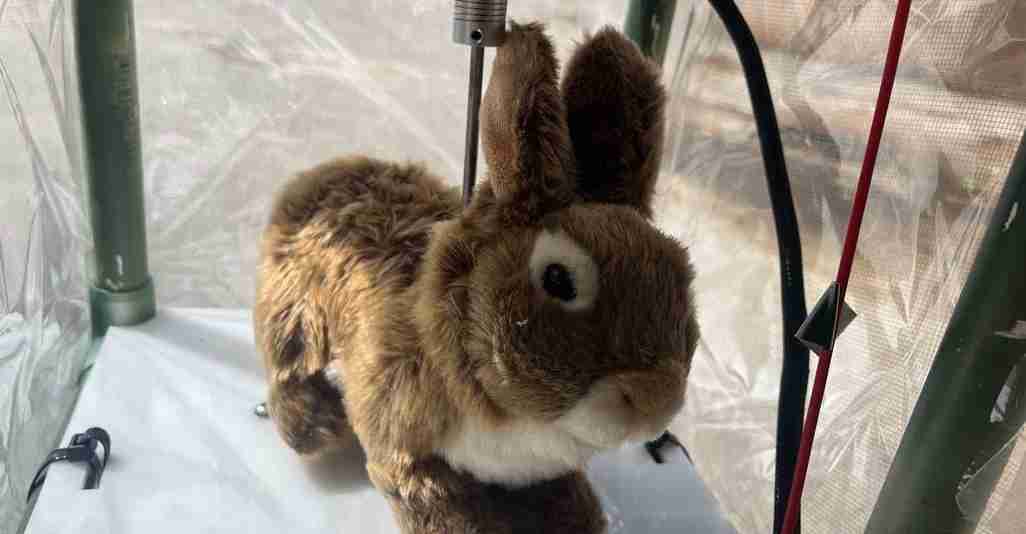
Robotic rabbits join Florida’s fight against invasive pythons as officials hunt for better detection tools
Florida has deployed solar-powered, remotely controlled robot rabbits in the Everglades to lure, detect and help capture invasive Burmese pythons, using heat, scent, motion and AI video analysis to protect native wildlife and support ecosystem restoration efforts.
Key takeaways
- Solar-powered robot rabbits mimic marsh rabbits with heaters, scent emitters, motors and cameras to attract pythons and monitor approaches.
- AI video analysis differentiates pythons from native snakes and alerts removal teams for capture and euthanasia.
- Costs and scale: units run about $4,000 each, are experimental, and are deployed by state and university partners.
- Broader strategy — robot rabbits complement volunteer events and state-led removal programs rather than replace them.
How the robot rabbits work
The South Florida Water Management District (SFWMD) and the University of Florida retrofitted durable toy rabbits with multiple features meant to fool Burmese pythons. Each unit:
- Produces heat to match a live marsh rabbit,
- Releases prey-like scents,
- Moves in small, natural ways using motors,
- Streams camera video to AI systems that distinguish pythons from native snakes.
When AI flags a python the system sends alerts to officials and contracted removers who respond to capture and humanely euthanize the snake. The SFWMD says units are solar powered, waterproof and remotely controllable, enabling continuous, low‑labor monitoring in marsh sites (SFWMD; CBS News).
Scale of the python problem
Burmese pythons are nonnative, with many introduced via the exotic pet trade and large releases tied to events such as the Hurricane Andrew era. Females can lay 50–100 eggs per clutch, adults often reach 10–16 feet, and the species has few predators in South Florida (CBS News; Route Fifty).
Scientists estimate tens of thousands of pythons in the Everglades. In parts of Everglades National Park, small mammals have declined by roughly 95%, and many bird species have been drastically reduced, threatening marsh function and costly restoration investments (CBS News; Route Fifty).
Who is behind the effort
SFWMD leads field deployments and funds the program. Key personnel include SFWMD invasive animal biologist Mike Kirkland and University of Florida researchers such as Professor Bob McCleery and Assistant Professor Chris Dutton, who helped design and test the units (SFWMD; University of Florida).
Operational strategy and costs
Robot rabbits sit inside small pens that protect devices and simplify detection. Video is run through AI models to cut false alarms so contractors and agency teams can respond efficiently. Each unit costs roughly $4,000 and is supported with SFWMD funding; officials say the lures reduce some manpower needs and can operate continuously on solar power (CBS News; Route Fifty).
Conservation stakes and taxpayer interests
Everglades restoration involves billions in public spending; invasive pythons undermine that investment by removing species essential to marsh function. Officials pitch the robot rabbits as a cost-effective complement to existing efforts — a targeted tool to improve detection and lower long-term control costs (Route Fifty).
Early results and outlook
Florida removed more than 11,000 pythons in 2023, but detection is difficult because snakes hide and blend into vegetation. Experimental deployments of robot rabbits began in 2024–2025; officials hope improved AI detection and stronger scent diffusion will increase catches and reduce wasted search hours (Route Fifty; CBS News).
Other programs working in concert
Robot rabbits are one element of a multi-pronged strategy. SFWMD supports the annual Florida Python Challenge™, while federal and state agencies run monitoring, education and removal contracts. Officials say technology can amplify volunteer and contractor efforts (SFWMD Python Program).
Questions and challenges
Investigators note open questions about durability in corrosive wetlands, interference by curious predators, AI accuracy across seasons, and how fast the program can scale if tests succeed. Officials emphasize the experimental nature of the project and plans to refine the devices with field data (CBS News; Route Fifty).
Implications for Redding, California
Economic impact
Redding taxpayers fund parks, wildfire prevention and river restoration. Florida’s approach shows how targeted investment in invasive‑species tech can protect public assets. Local leaders can study budgeting for pilot tools, partnership models, and unit cost tradeoffs (SFWMD; CBS News).
Political consequences
Conservative voters focused on fiscal responsibility may favor small, accountable pilot projects paired with university research. The robotic-lure model shows how agencies can distribute costs across state funds, contractors and volunteers (Route Fifty).
Social effects & cultural relevance
Redding’s outdoor communities value healthy wildlife and safe public lands. The robot rabbit story illustrates how science and technology can serve stewardship goals, but visible taxpayer spending on experimental gear demands transparency and clear success metrics (CBS News).
Practical applications for local agencies
- Run small pilots with clear success metrics before scaling.
- Partner with universities for low‑cost research and student involvement.
- Combine tech tools with volunteer removal events to stretch budgets.
- Be transparent about unit costs, maintenance needs and expected outcomes.
Reporting and sources
This report draws on statements and coverage from agency and media sources. Read more:
- SFWMD news release
- CBS News coverage
- Route Fifty feature
- Associated Press video release
- University of Florida feature
- Palm Beach Post coverage
- SFWMD Python Program
“The robot rabbits are experimental tools designed to improve detection and amplify ongoing removal efforts, not replace community and agency programs.”