
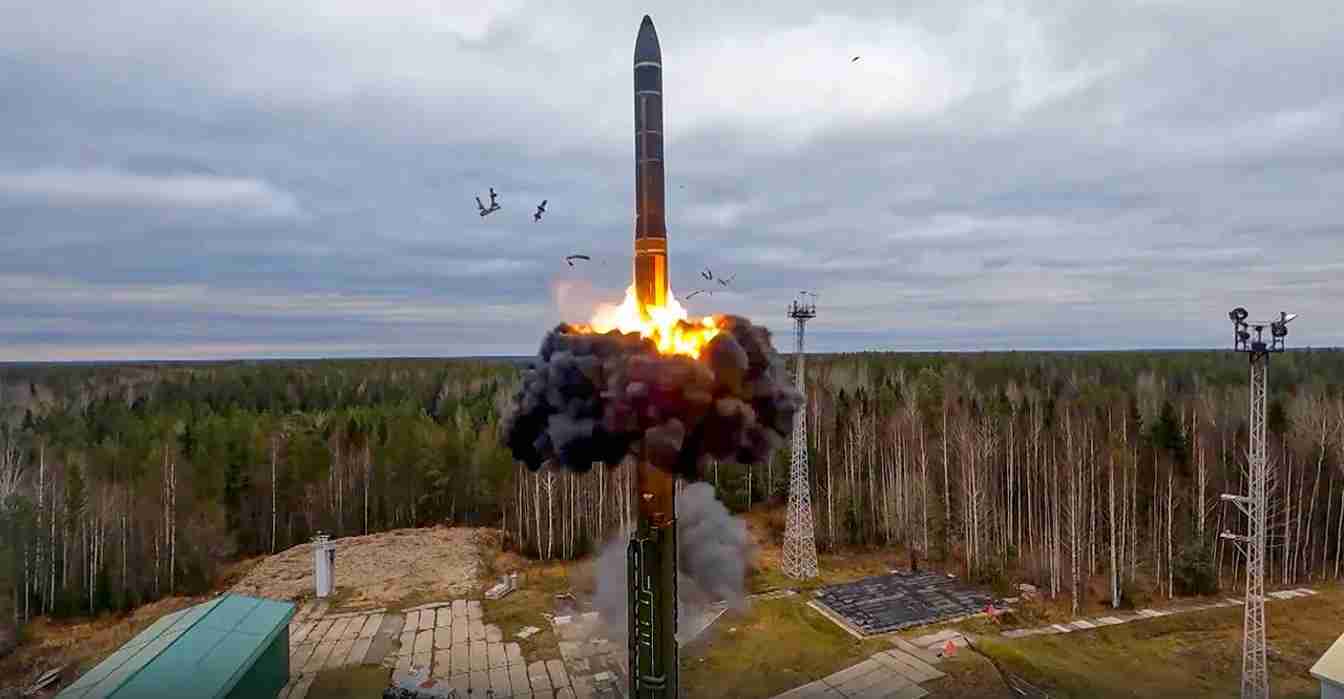
Trump orders immediate resumption of U.S. nuclear weapons testing, cites Russia’s Burevestnik and China’s growing arsenal
President Donald Trump ordered the Pentagon to begin nuclear weapons testing immediately, citing Russia’s Burevestnik cruise missile activity and China’s expanding arsenal — a dramatic break from the three-decade de facto moratorium announced ahead of an Asia summit.
- President Trump directed the Pentagon to “start testing our Nuclear Weapons on an equal basis,” saying the process “will begin immediately.” Source: Legion.org.
- The announcement followed reports of a Russian test of the nuclear-powered Burevestnik (“Skyfall” in NATO terminology) and cites concerns about China’s growing stockpile. Source: Legion.org.
- The U.S. last conducted a full-scale nuclear explosive test in 1992; resuming tests would break a long-standing international norm. Source: Legion.org.
Background: what the order says and why
Trump’s directive instructed the Pentagon to conduct nuclear testing “on an equal basis” with other nations, tying the decision explicitly to perceived advances by Russia and China. The president posted the order online, saying: “Because of other countries testing programs, I have instructed the Pentagon to start testing our Nuclear Weapons on an equal basis. That process will begin immediately.” Source: Legion.org.
Russia’s Burevestnik test and what it means
A central rationale for the order was a reported Russian test of the Burevestnik, a nuclear-powered cruise missile Moscow says can travel extremely long distances and challenge missile defenses. NATO has nicknamed the system “Skyfall.” Russian officials reported a test on Oct. 21, which U.S. officials have treated as a significant delivery-system development. Source: Legion.org.
Important distinction: the Burevestnik test demonstrated propulsion and delivery technology, not a nuclear detonation. But the administration framed such advances as part of a larger strategic threat that could justify resuming live nuclear explosive tests to confirm warhead designs or yields.
China’s expanding nuclear capabilities
The president also cited Beijing’s rapid arsenal growth and modernization of delivery systems as a motivating factor. U.S. officials and outside analysts have raised concerns over the pace and scale of China’s buildup; the White House framed testing as a response to maintain credible deterrence in that changing environment. Source: Legion.org.
What resuming nuclear testing would involve
A return to live nuclear explosive testing would mean detonating devices to measure performance, yield and reliability — activities the U.S. has not carried out since 1992. Operationally and politically, the move requires presidential authorization, test-site preparation, coordination with national laboratories, and likely additional environmental and safety reviews.
There is a meaningful difference between testing delivery systems (missile launches, integration trials) and explosive nuclear testing. The president’s language indicates an intent to break the de facto moratorium on explosive tests, not merely expand non-explosive demonstrations.
Legal and treaty context
The United States, Russia and China have signed the Comprehensive Nuclear-Test-Ban Treaty (CTBT), which would ban all nuclear explosions, but none of the three has fully ratified it and the treaty has not entered into force. The global norm against live nuclear testing has largely held since the 1990s, with the notable exception of North Korea.
Global and domestic response: possible fallout
Officials and experts warn that resuming tests could weaken the non-proliferation regime and prompt other states to accelerate programs. Allies committed to non-proliferation may be alarmed, while rivals could interpret the move as permission to follow suit.
Domestically, the announcement arrived during a government shutdown that limited official comment, complicating immediate responses from the White House and Pentagon and leaving questions about timeline, cost and oversight.
Technical, political and budget questions
Resuming explosive testing is not a simple flip of a switch: it requires specialized test ranges, coordination with national laboratories that design and certify warheads, environmental and safety reviews, and likely significant budget allocations. Analysts estimate that test preparations and follow-on programs could cost billions over time.
Politically, Congress, allies and defense experts will press for briefings and oversight. Reactions will split: some who prioritize strong deterrence may support the move, while others will highlight diplomatic and strategic risks.
Implications for Redding, California
Economic impact: Any Pentagon shift toward testing or related modernization could alter defense contracting flows. Northern California firms that support defense work might see indirect opportunities, though major testing infrastructure is located elsewhere.
Political consequences: Redding’s conservative-leaning audiences may welcome a stronger nuclear posture; local debate could surface between security-focused voices and residents concerned about environmental or diplomatic costs.
Social effects: Resuming tests raises environmental safety and public-health questions even if tests occur far from populated areas. Local emergency planners and veterans’ groups may seek briefings and information on contingency planning.
Practical guidance for residents: No immediate local action is expected — historically, U.S. nuclear test sites are remote — but residents should stay informed via official Pentagon briefings and local news. Veterans’ organizations and local officials may host forums as developments continue.
Source attribution and further reading
This report draws on Times Media Service coverage and analysis; key details and quotations are reported by the Legion article. The article will be updated as Pentagon statements, congressional responses and technical assessments become available.



