Federal judge blocks National Guard deployment to Portland, citing state sovereignty and constitutional limits
A federal judge in Oregon has blocked the Trump administration from deploying 200 Oregon National Guard troops to Portland, citing state sovereignty, constitutional limits and insufficient factual basis; the Department of Justice said it will appeal the restraining order.
Key takeaways
- Temporary restraining order: U.S. District Judge Karin Immergut halted federalization and deployment of about 200 Oregon National Guard troops.
- Constitutional concern: The judge said the protests were largely small and nonviolent and that the federal action threatened state sovereignty — noting, “this is a nation of Constitutional law, not martial law.”
- Administration appeal: The Department of Justice filed notice with the 9th U.S. Circuit Court of Appeals and plans to contest the restraining order.
- Legal question: The case centers on presidential authority under 10 U.S.C. § 12406 and the factual threshold required to federalize the National Guard.
Background and ruling
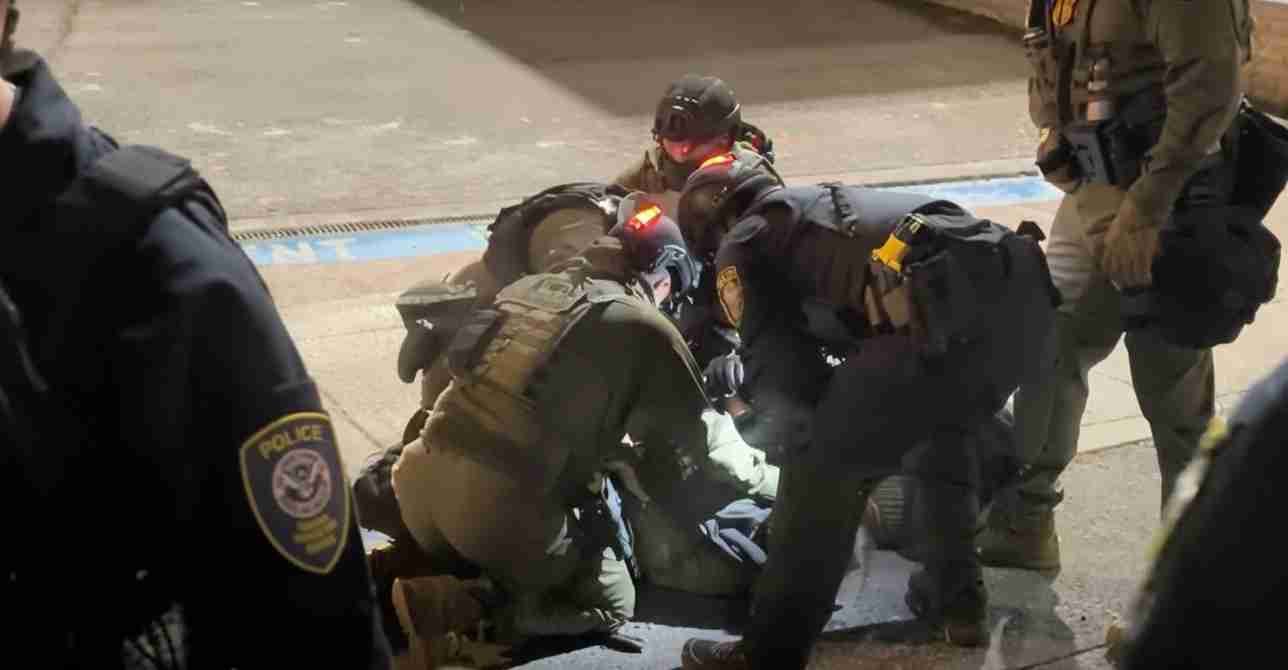
State and city challenge: Oregon and the city of Portland sued to stop what they described as an improper federal takeover of state forces after the White House announced plans to federalize roughly 200 Oregon National Guard members and move them to Portland.
Judge’s assessment: In her order, Judge Karin Immergut weighed evidence about protests near a federal immigration building and found officials’ descriptions that demonstrations were small and largely nonviolent persuasive. She observed that while presidents typically receive deference when asserting local authorities cannot handle unrest, that deference was not warranted here — calling the federal action “untethered to the facts.”
“This is a nation of Constitutional law, not martial law.” — U.S. District Judge Karin Immergut
Why the statutory text matters: 10 U.S.C. § 12406
Statutory focus: A central legal question is whether the President may call National Guard units into federal service under 10 U.S.C. § 12406, which permits federalization when the United States is invaded, faces a rebellion, or when the President is unable with the regular forces to execute federal laws.
10 U.S.C. § 12406. National Guard in Federal Service: Call
Whenever —
(1) the United States is invaded, or there is danger of invasion;
(2) a rebellion or danger of a rebellion against the authority of the United States exists;
(3) the President is unable with the regular forces to execute the laws of the United States;
the President may call into federal service members and units of the National Guard of any State. The President may call them into federal service as he considers necessary to perform such service for the duration of the necessity.
Competing interpretations: The administration contends the statute permits federalization to protect federal property and enforce federal law; Oregon counters the statute requires a demonstrable inability of state or local authorities to maintain order — a threshold the court found unmet.
Federal response and plans to appeal
Appeal filed: The White House filed a notice of appeal with the 9th U.S. Circuit Court of Appeals and the Department of Justice announced it will contest the emergency restraining order, arguing the President acted to protect federal buildings and personnel.
Potential fast track: Legal experts note the 9th Circuit may act quickly because the dispute involves the immediate use of force and federal-state relations. If the appeals court lifts the order, deployment could proceed while litigation continues; if it upholds the order, it would reinforce limits on federal control of the Guard.
Local officials and reactions
Oregon and Portland: State and city leaders said the federal action mischaracterized conditions near the federal immigration building, describing the area as calm and within the capacity of local law enforcement.
Supporters vs. opponents: Supporters of intervention argue the federal government must protect federal property; opponents warn federalizing Guard troops risks escalation and may violate constitutional norms protecting state control.
What this case tests
Core balance: The litigation tests two competing principles — the President’s duty to protect federal property and enforce federal law, and the states’ rights to control their National Guard forces and manage local order.
Precedential impact: The outcome could shape future disputes over federal intervention in civil disturbances and clarify the scope of presidential authority under 10 U.S.C. § 12406 and related statutes.
Investigative notes on the facts
- Number of troops: The announced federalization covered about 200 Oregon National Guard members.
- Nature of protests: Oregon described demonstrations as limited, largely nonviolent, and within the capacity of local police.
- Judicial tone: Judge Immergut emphasized constitutional concerns and explicitly rejected comparisons to martial law.
Sources and further reading
- Military.com report on the restraining order and federal response
- ClickOrlando coverage of the lawsuit and court order
- Euronews report on the hearing and appeals notice
- Fortune analysis on constitutional concerns and the judge’s language
Implications for Redding, California
Context: The ruling has practical and political implications for Redding and Shasta County officials who rely on National Guard support for emergencies like fires and floods.
Economic and practical effects
National Guard readiness could be affected if federalization becomes easier; local planners should monitor whether Guard missions might be shifted to federal control, which would alter response planning and resource availability for wildfire response, search-and-rescue and other emergencies.
Political consequences
For conservative readers in Redding, the ruling underscores state sovereignty and the role of governors in deciding Guard deployments. The decision may prompt local leaders to press state officials to defend state control in future disputes.
Social and community effects
If courts limit federal intervention, local law enforcement in West Coast cities — and regional partners near Redding — would likely retain primary control over protests, reducing the risk of escalation that sometimes follows federal deployments.
Cultural and legal relevance
The decision foregrounds constitutional limits on federal power that many voters in Redding value and will likely stimulate debate about protecting federal property versus preserving local control.
Practical guidance for residents and officials
- Stay informed: Monitor developments in the 9th Circuit appeal; a reversal or affirmation will change federal-state coordination rules.
- Plan for contingencies: Emergency plans should include scenarios where Guard units are federalized or remain under state command, affecting responses to fires, floods and other local missions.
The coming days
The 9th U.S. Circuit Court of Appeals is the likely next forum for a swift decision. The appeal will test how much deference courts must give the President’s judgment about threats to federal property and the factual standard necessary to federalize state Guard units. Conservative audiences in Redding and across California will watch whether the courts preserve strong state control or defer to expanded federal intervention.