
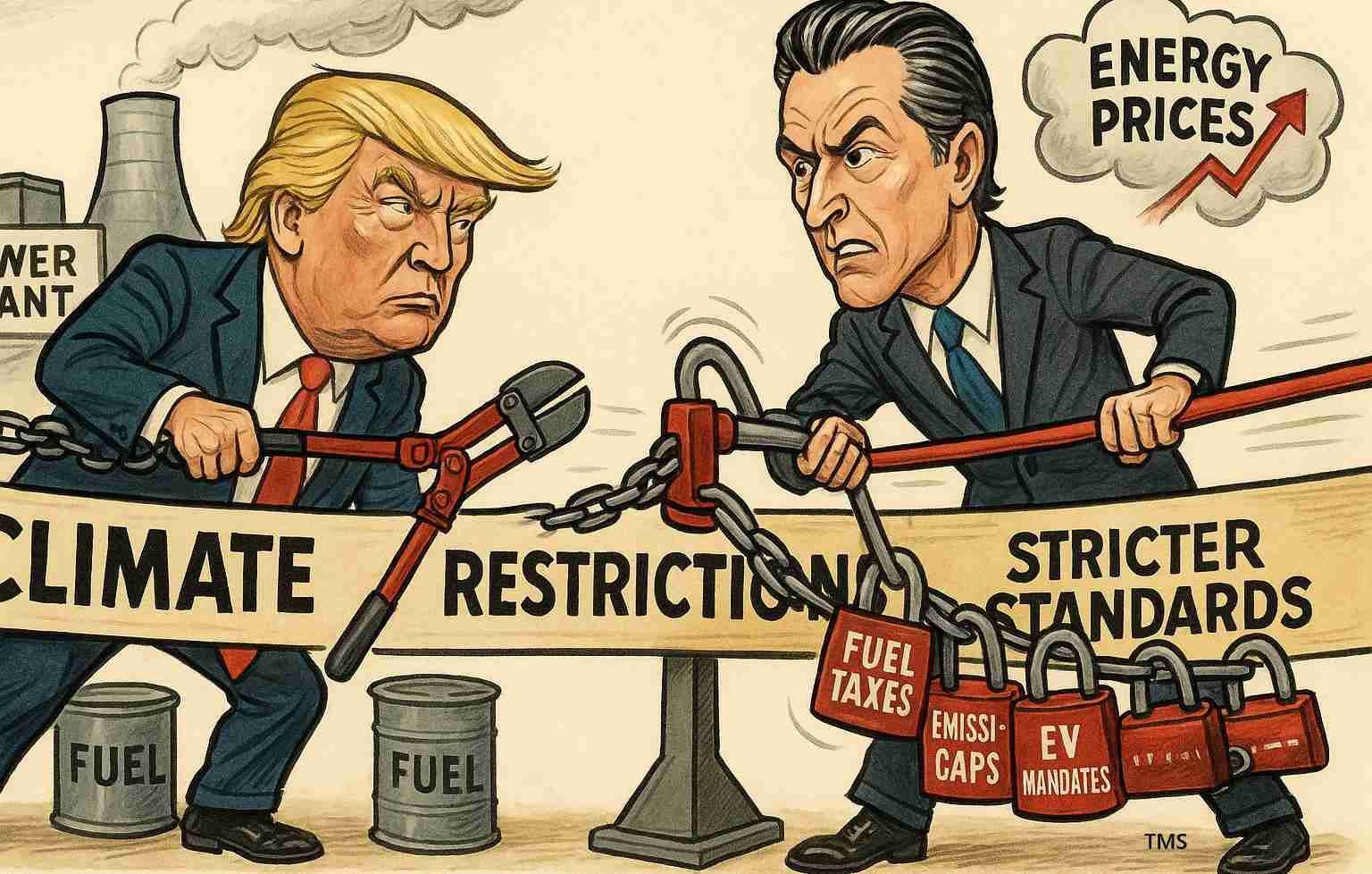
As Trump Moves to Gut Climate Reporting Rules, California Readies Legal Defenses — Redding May Weather Federal Rollbacks Better Than Most
The Trump administration is rolling back federal climate reporting and disclosure rules; California, armed with strict laws and court wins, is preparing legal and regulatory defenses to protect state standards and communities such as Redding.
Key takeaways
- California’s laws (SB 253 and SB 261) create robust corporate reporting and disclosure requirements and have survived early court challenges, strengthening the state’s legal position. SB 253 and SB 261 • KPMG reference
- Federal rollback — an April 2025 executive order and moves to rescind the EPA’s endangerment finding — shifts regulatory authority to states and creates patchwork risks. executive order in April 2025 • White House action
- Market influence — California’s market size pushes many companies to adopt state standards nationally, amplifying the state’s climate resilience even amid federal retrenchment. AOL analysis
What the federal moves mean
In April 2025, the White House issued an executive order aimed at curbing what it called “state overreach” in energy and climate policy. That order specifically challenges state laws that set stricter standards than federal rules, particularly around greenhouse gas reporting and environmental justice. See the new executive order analysis and the White House presidential action.
At the same time, the administration has signaled plans to unwind key federal climate tools, including moves to rescind the EPA’s greenhouse gas “endangerment finding”. Reporting and disclosure expectations for companies are also being scaled back, with the administration asking the SEC to step aside on certain climate risk disclosure efforts. Read coverage in the Los Angeles Times, analysis at Columbia Law’s climate blog, and tracking at Acton Institute’s Trump tracker.
“Those moves weaken uniform national standards and shift authority to the states, creating a patchwork that could vary widely across the country.”
California’s legal backbone
California has long set higher environmental rules than the federal government. Its recent climate reporting laws — SB 253 and SB 261 — require large companies to disclose annual direct and value-chain greenhouse gas emissions (Scope 1, 2 and 3) and climate-related financial risks and adaptation measures. For background and summaries see the KPMG reference.
SB 253 generally targets companies with over $1 billion in global revenue for reporting Scope 1, 2 and 3 emissions; SB 261 requires disclosures from companies with more than $500 million in revenue about climate-related financial risks and adaptation steps. Early legal challenges have allowed most reporting requirements to move forward, strengthening the state’s position. See reporting on the court outcomes at ESG Today.
State agencies are ready
California’s Air Resources Board and other agencies possess the staff, technical models, and rulemaking experience to continue implementing programs even if federal support recedes. Officials say they will avoid sudden enforcement and provide practical timelines for businesses while rules are finalized. Coverage on agency readiness is available from the Los Angeles Times and Green Central Banking.
Legal strategy and the courts
California’s legal teams have extensive experience litigating environmental rules against federal and industry challenges. State attorneys are preparing robust defenses that lean on precedents and the state’s police powers to protect public health and the environment. See analysis at Environment & Energy Law & Policy and the Los Angeles Times.
Nevertheless, legal risks persist: industry groups argue some disclosure rules could raise constitutional issues such as First Amendment concerns. Courts — and potentially the Supreme Court — will weigh how far states can go when federal policy heads the opposite direction. See coverage of court skirmishes and state progress at ESG Today and Green Central Banking.
Market influence beyond state lines
California’s large market and regulatory infrastructure give it outsized influence: many national and global companies choose to adopt California standards across operations, effectively exporting the state’s rules nationwide. Analysts note this dynamic bolsters California’s climate resilience by tying corporate practices to state law rather than shifting federal policy. See AOL analysis and the KPMG reference.
How other states compare
A few states, such as New York and Vermont, have explored similar disclosure regimes, but many lack California’s legal precedents, enforcement track record, and market clout. That makes them more vulnerable to federal preemption and industry lawsuits as federal standards weaken. See Environment & Energy Law & Policy, Green Central Banking, and AOL.
Policy risks and opportunities
The federal rollback injects uncertainty: courts may curb state divergence from federal standards, but California could gain a competitive edge. Companies that prefer regulatory certainty may adopt California standards nationwide, rewarding investments in cleaner operations and resilience. Analysts highlight this potential in AOL analysis.
Implications for Redding, California
Economic impact
- Local businesses: Redding firms that sell nationally or cross state lines may need to follow California’s climate reporting laws, potentially increasing compliance costs but creating opportunities for consultants, auditors, and green service providers. See ESG Today and the KPMG reference.
- Jobs and investment: Early adopters of resilience standards may attract contracts and investment in clean energy, forestry management, and infrastructure in the Redding area. See market influence coverage at AOL.
Political consequences
- Local politics: The tension between state climate rules and federal rollback may become a campaign issue in Redding, where some voters emphasize limited government and lower energy costs. See the White House action.
- State-federal fights: Residents may see increased litigation, public hearings, and policy debates as Sacramento defends its authority. Coverage at Environment & Energy Law & Policy.
Social effects
- Community resilience: State-funded programs for wildfire mitigation, water management, and emergency response could bring tangible benefits to Redding. See reporting at the Los Angeles Times.
- Costs to households: If businesses pass compliance costs to consumers, some local households could face price increases; leaders must weigh short-term costs against long-term resilience gains.
Cultural relevance
In Redding, emphasizing transparency, risk management, and long-term economic stability may resonate more with conservative communities than arguments framed only in environmental terms. See context in AOL analysis.
Practical applications for residents
- Business owners: Review supply chains and reporting obligations if revenue thresholds under SB 253 or SB 261 apply; early planning reduces risks.
- Local officials: Seek state funding for wildfire mitigation and water projects tied to climate resilience.
- Citizens: Watch court cases and state rulemaking closely; enforcement timelines could change compliance expectations. See analysis at Green Central Banking.
Reporting and sources
This reporting draws on multiple legal and policy analyses and news reports, including:



